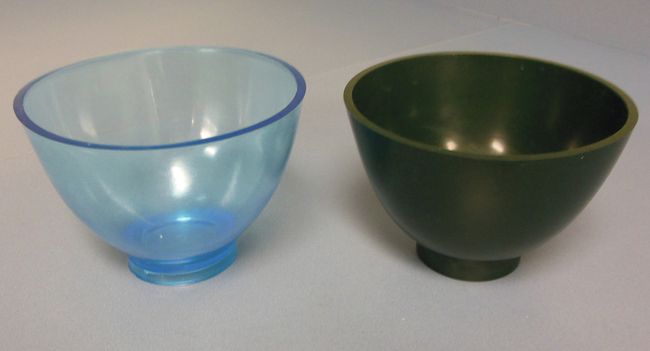
 Special Notes/Helpful Hints • Disinfect bowls according to manufacturer’s instructions. Some disinfectants may break down the composition of the material used to fabricate the bowl. • Bowls should always be disinfected before and after use with a patient.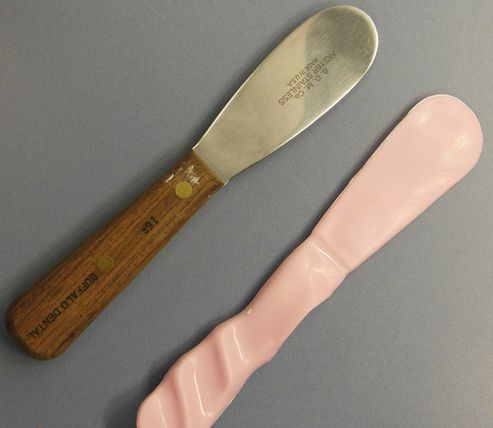
 Special Notes/Helpful Hints • Disinfect the spatula according to manufacturer’s instructions. Some disinfectants may corrode metal or break down plastic. • The spatula should always be disinfected before and after use with a patient.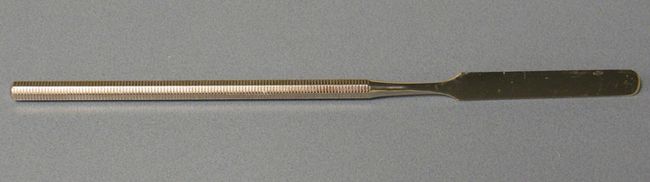
 Special Notes/Helpful Hints • Ensure all residual dental materials have been removed from the spatula before sterilization. Bacteria can be present under the mixed material and live through a sterilization cycle, contributing to cross-contamination.
MATERIAL
Disposable Perforated Full-Arch Impression Trays
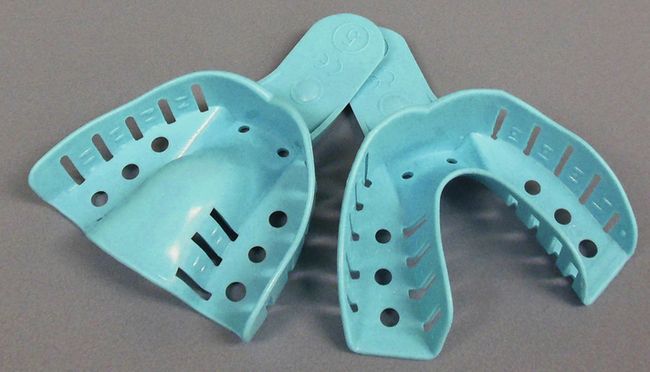
Use
 Special Notes/Helpful Hints • The impression tray has perforations, which allow the impression material to flow through the openings and lock into place. This action prevents the need for tray adhesive. • The impression tray is made of plastic and is considered to be disposable. The impression tray should be used with only one patient. • The impression tray can be used more than once in a single visit on the same patient if the quality of the impression is poor and the impression needs to be retaken. • When the impression has been determined to be of good quality, the impression should be poured. The impression tray should be thrown away after the model has been separated from the impression. • Attempting to sterilize plastic impression trays can cause the plastic to become porous; this allows bacteria to survive in the pores of the plastic, and cross-contamination can occur.
MATERIAL
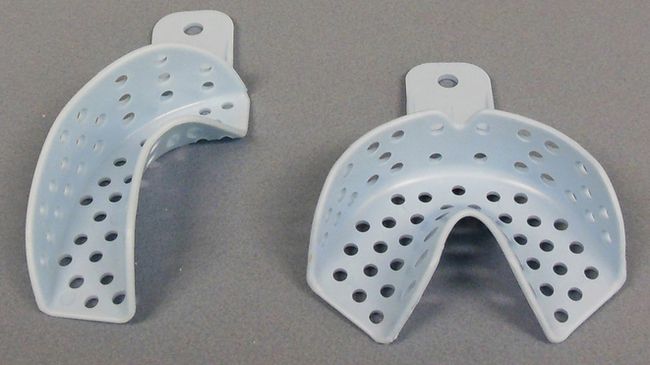
Disposable Perforated Quadrant and Anterior Impression Trays
Use
 Special Notes/Helpful Hints • The impression tray has perforations, which allow the impression material to flow through the openings and lock into place. This action eliminates the need for tray adhesive. • The impression tray is made of plastic, and the tray is considered to be disposable. The impression tray should be used with only one patient. • The impression tray can be used more than once in a single visit on the same patient if the quality of the impression is poor and the impression needs to be retaken. • When the impression has been determined to be of good quality, the impression should be poured. The impression tray should be thrown away after the model has been separated from the impression. • Attempting to sterilize plastic impression trays can cause the plastic to become porous; this allows bacteria to survive in the pores of the plastic, and cross-contamination can occur.
MATERIAL
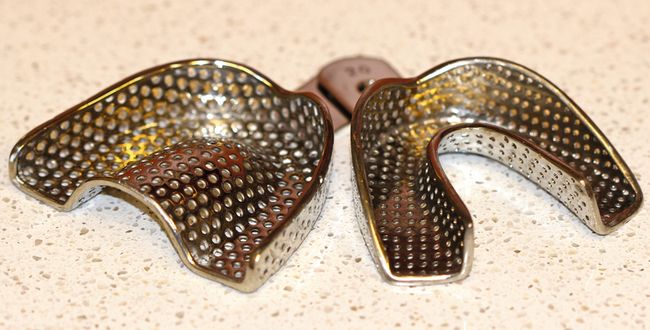
Reusable Perforated Metal Impression Trays
Use
 Special Notes/Helpful Hints • The impression tray has perforations, which allow the impression material to flow through the openings and lock into place. This action eliminates the need for tray adhesive. • Metal impression trays must be cleaned thoroughly to ensure all residual impression material and gypsum have been removed before sterilization. Any residual material can harbor bacteria, resulting in cross-contamination. • Sterilize the impression tray according to manufacturer’s instructions.
MATERIAL
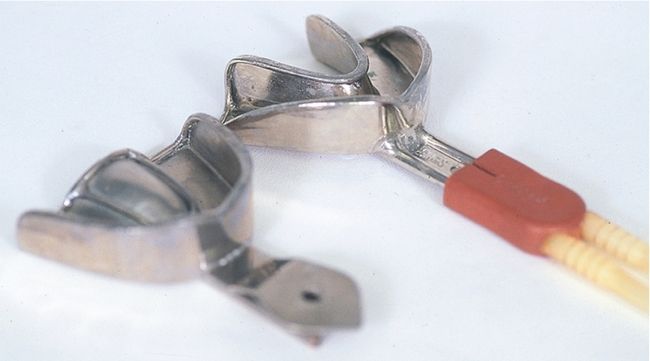
Reusable Nonperforated Metal Impression Trays
From Bird and Robinson, 2015.
Use
 Special Notes/Helpful Hints • The impression tray does not have perforations, which means that the impression material cannot flow through the openings and lock into place. Tray adhesive should be used with nonperforated impression trays to assist in adherence of the impression material in the tray. • Metal impression trays must be cleaned thoroughly to ensure all residual impression material and gypsum have been removed before sterilization. Any residual material can harbor bacteria, resulting in cross-contamination. • Sterilize the impression tray according to manufacturer’s instructions.
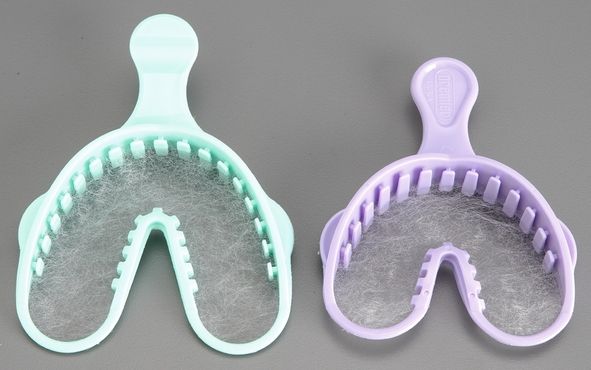
 Special Notes/Helpful Hints • The triple tray is disposable and should be discarded when the final restoration has been successfully delivered to the patient.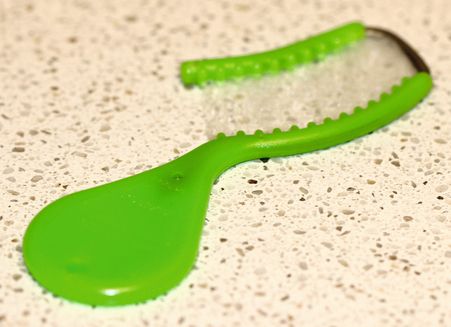
 Special Notes/Helpful Hints • The bite registration tray is disposable and should be discarded when the final restoration has been successfully delivered to the patient.
Stay updated, free dental videos. Join our Telegram channel

VIDEdental - Online dental courses